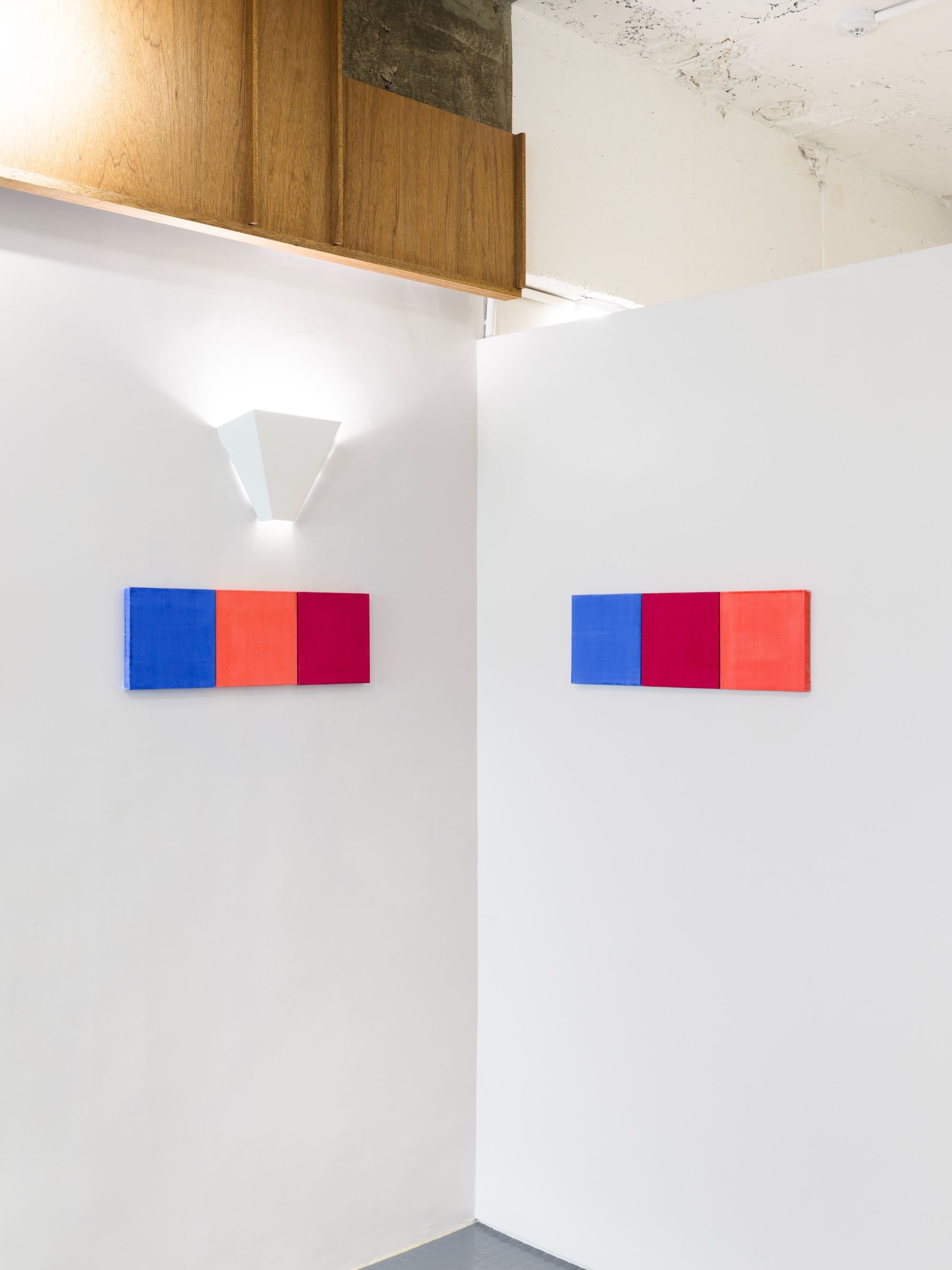
Photography by Jeongkyun Goh. Images courtesy of Pokettales.
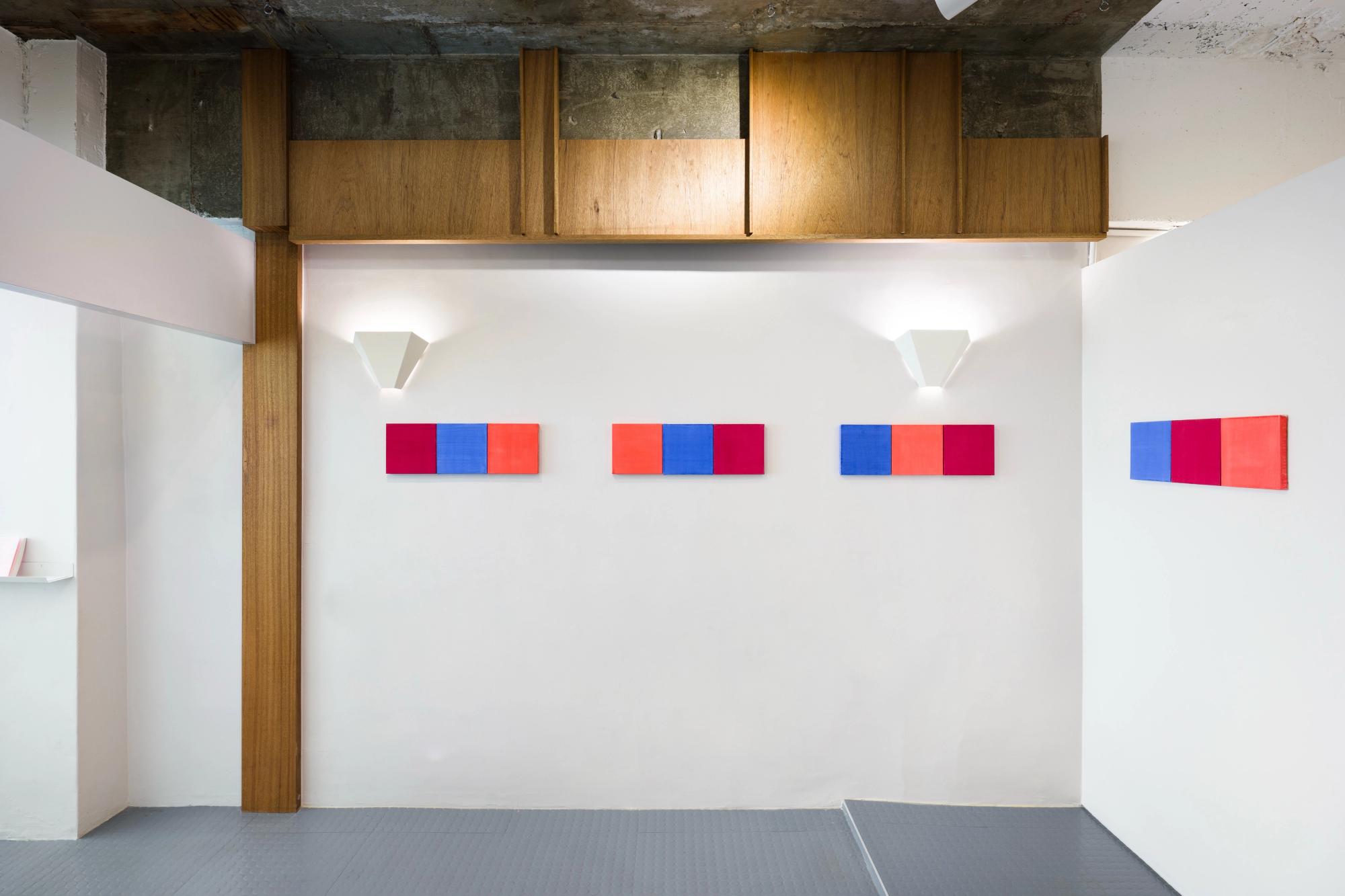
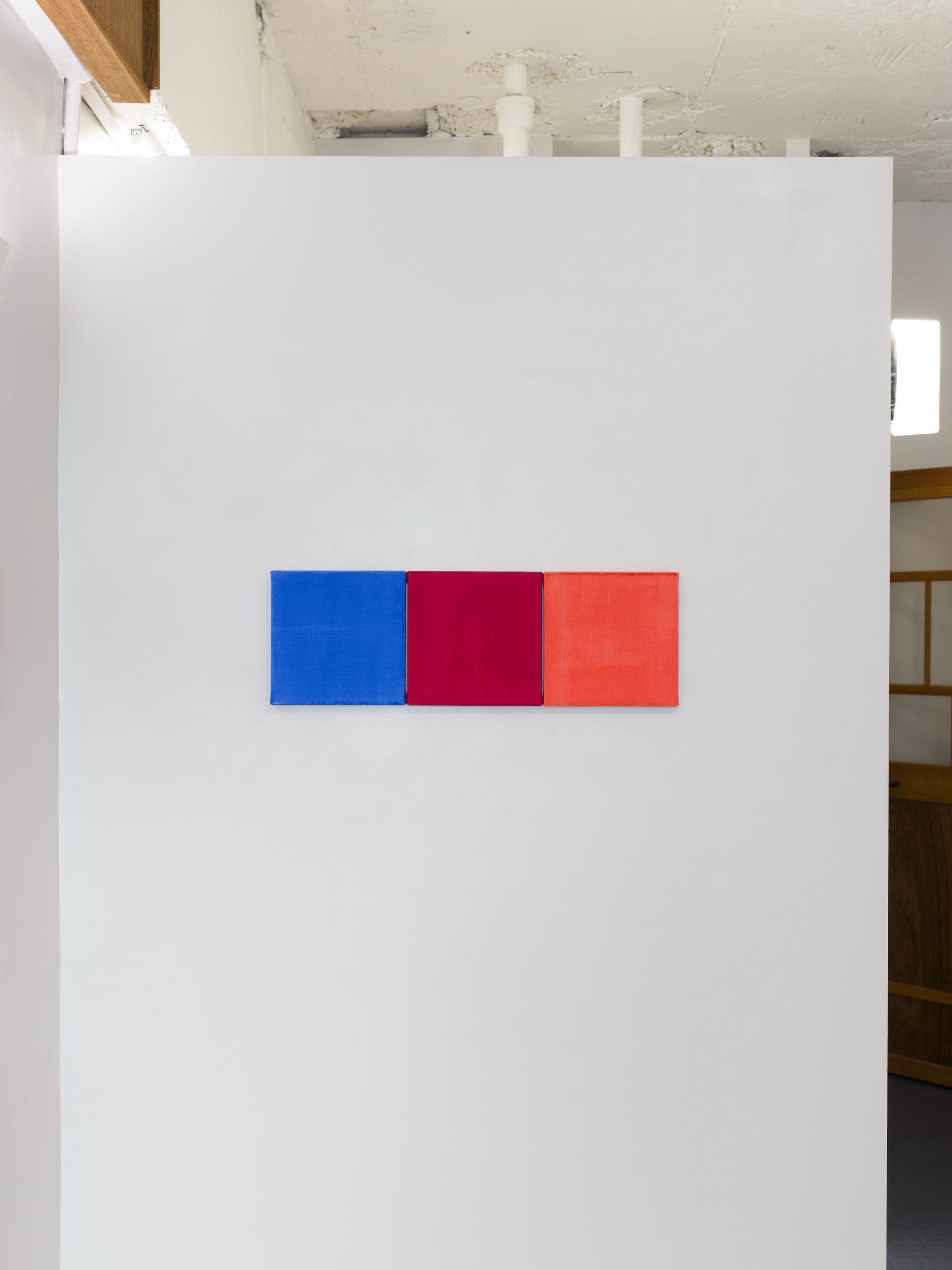
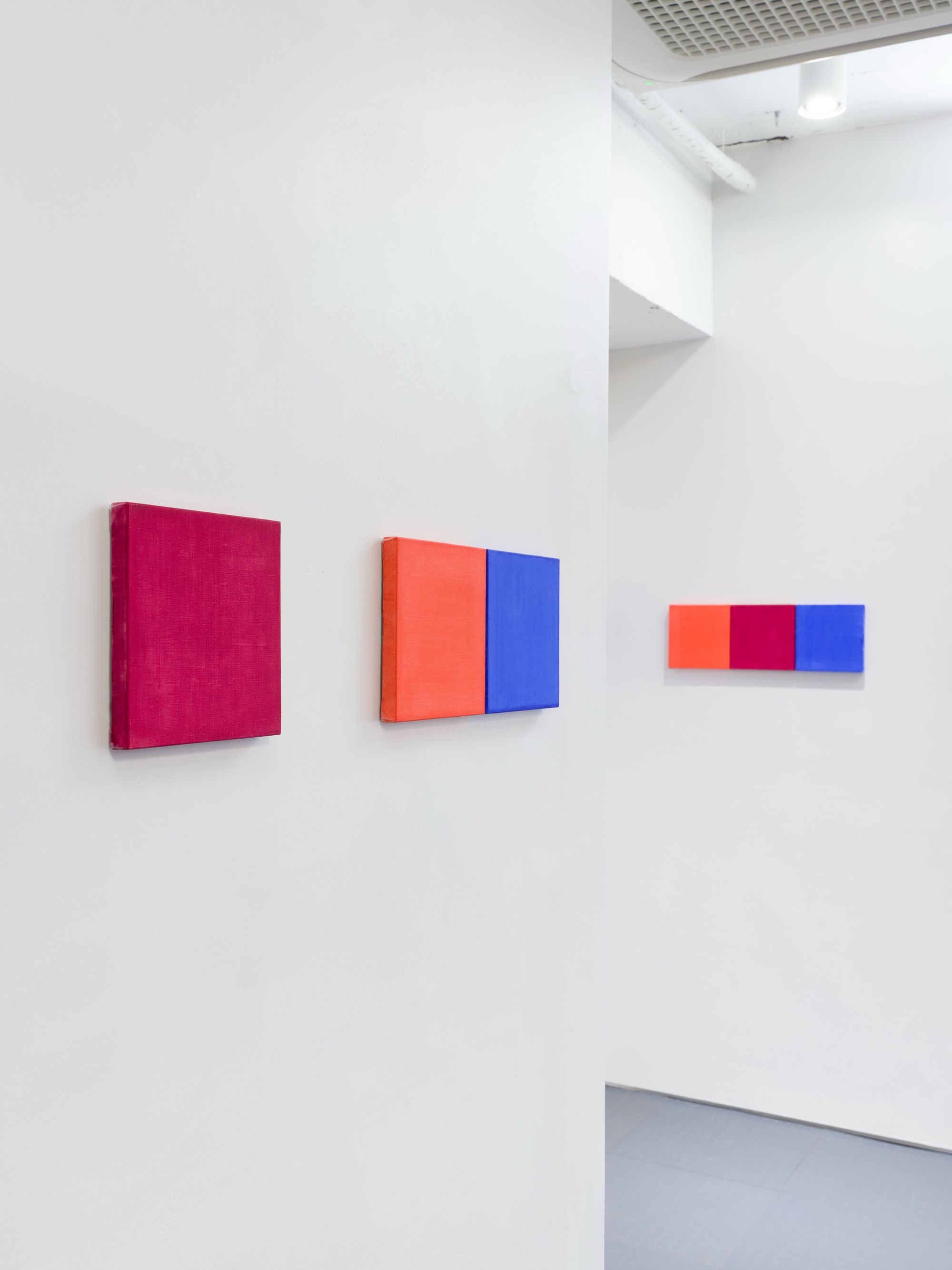
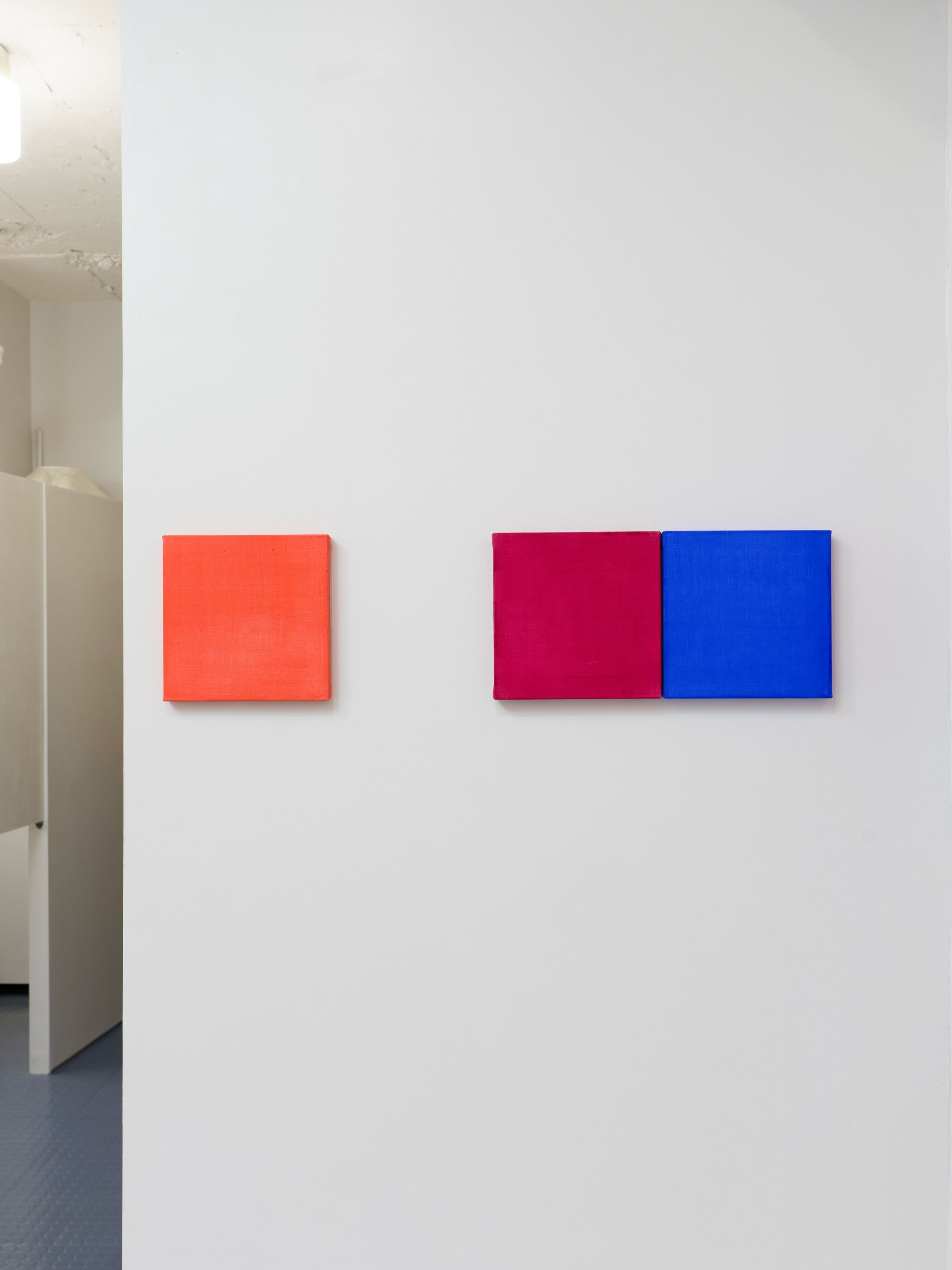
“Color is everywhere.” For Melody Park, color is everything visible—a totality of sensation encompassing people, time, and space. She does not treat color as a mere tool for expressing something else. Color itself is at the center of her work: it is both material and structure, giving rise to form and composition. 1, 2, 3 distills more than a decade of Park’s observing, recording, and arranging color into a single form.
Its roots lie in diary, an ongoing series, akin to a daily journal, that she began in 2016. Each day, she translates a color she encounters onto a small, 20×20cm monochrome canvas. As these individual color canvases accumulated in her studio, she came upon something unexpected: the same color could appear completely different depending on where it was placed and which colors surrounded it. Color is never complete in isolation; it reveals itself fully only in relation to other colors. 1, 2, 3 begins with this realization and directly explores the relationships that emerge when colors encounter one another.
In translating this relationship into visible form, she returned to the oldest grammar of painting. From the point where Kazimir Malevich reduced painting to its most elemental state with Black Square, she looked anew at the point, the line, the plane, and their extensions into stripes and grids. A grid that repeats and extends in every direction became a coordinate system through which she could gauge where to place a color on the plane and how much space to leave between one color and the next. On these coordinates, the smallest unit she settled on is three. A relationship that stays hidden when a color is alone, and remains loose with only two, is drawn taut only once three come together. This idea also draws on Sanzo Wada's A Dictionary of Color Combinations (配色事典), a compendium of the color sensibilities of Japan's Taishō and Shōwa eras. In this book, which lays out hundreds of combinations from two to four colors across vast color charts, she was drawn in particular to combinations where three different colors of equal size form a unit. A unit made this way is close to a word in language, or a short phrase in music. This exhibition attends to the rhythm these units create when placed in a row, and to the way the intervals between them, color to color and canvas to canvas, extend into the gallery space.
This way of seeing color as both relation and sensation meets Park’s long-standing interest in the fundamental subjectivity of color perception itself. In Interaction of Color, Josef Albers wrote that if one says "red" to fifty people, fifty different reds will be evoked in their minds. The artist reaffirms this in her own way: even the same color arrives differently each time, depending on the light and space in which it is met and on the state of the person looking at it in that moment. For her, color is not a fixed object but a pre-cognitive, pre-linguistic force, and diary became her way of posing, through color, a Heideggerian question—not "what is time" but "who is time." This same current runs through her experience in 2020, when, moving through the pandemic and a time of personal crisis, she found aesthetic solace in intense colors such as bismuth vanadate yellow and cobalt blue. Color was something she observed, and at the same time a sensory language that sustained her.
This attempt to capture time and existence through the day as a minimal unit is not unique to Melody Park. On Kawara’s Today series, in which he inscribed only the date of each day on canvas from 1966 until his death in 2014, stands as a seminal example of affirming existence through the repeated act of recording each passing day. Though their forms differ, Kawara and Park share an approach grounded in taking the day as a minimal unit of accumulation and inscribing the passage of a life within that repetition. In this sense, Kawara’s practice quietly resonates with the color diary Park has sustained for over a decade.
In 1, 2, 3, viewers encounter units of color condensed into a minimal relationship of three. Each unit is like a word complete in itself, a single breath, yet the moment they are set side by side they generate different rhythms and new meanings. The space between them does not remain within the canvas but opens into the gallery space and into the viewer’s senses. As with the artist’s years of research into color, this exhibition remains not a conclusion but a continuing question. The color encountered here today may appear differently when seen again tomorrow, and viewers are invited to freely interpret the relationships among these colors through their own eyes and senses.