hotography by Sonongji. Images courtesy of Hite Collection.
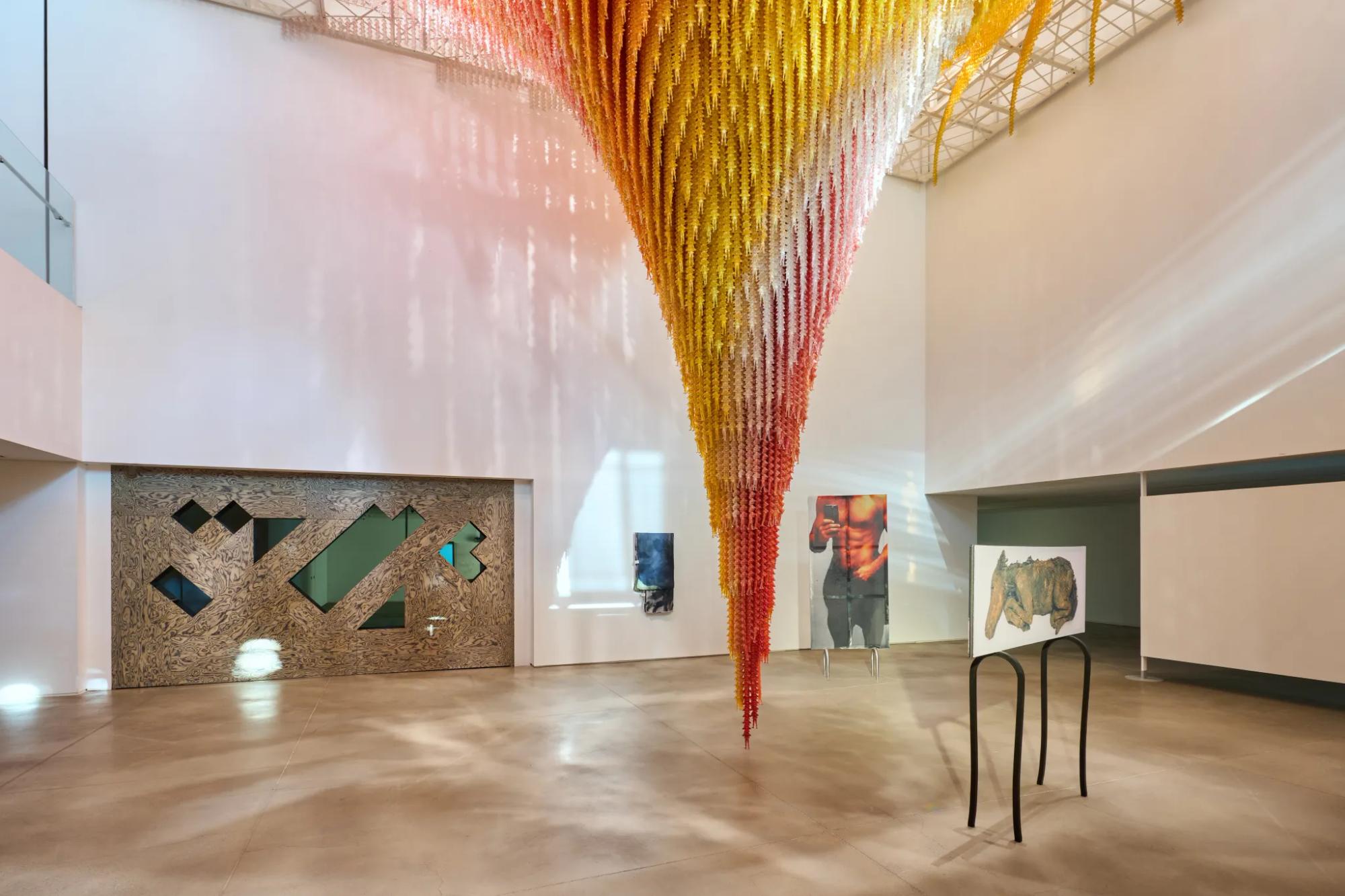
Hite Collection presents All That Is Distant Is Closed as its young artists exhibition for the second half of 2026. Featuring paintings, sculptures, videos, and performances by five artists in their twenties and thirties, the exhibition examines their distinctive sense of the times. It focuses particularly on their perceptions of time—past, present, and future—and of space, both real and virtual. Drawing on references from diverse fields to make sense of a rapidly changing world, the participating artists approach time and space with sensitivity and openness.
Often described as Generation Z, these artists have an intuitive familiarity with digital media and a strong grasp of rapidly evolving AI technologies. Yet they are less optimistic about the future than any generation before them. Fascination with technology coexists with distrust, as they witness the climate crisis, war, economic instability, housing issues, and changes in the structure of labor unsettling their lives. With little reason to believe that the future will be better than the present, their sense of time departs from the linear understanding of previous generations. The future seems to have already arrived, while the past becomes data that can be summoned into the present at any moment. The present is no longer a stable point between past and future, but something that either flashes by or gathers all times into a single, overlapping mass. This sensibility also blurs the boundary between the real and the virtual, a process accelerated by the integration of media and AI into everyday life.
The exhibition title, All That Is Distant Is Closed, holds two imaginings together: the past and the future—all that is distant—converging at a single point to form a tightly closed present; and, at the same time, all those distant things that remain beyond reach, however closely we approach them.
The exhibition is co-curated by Lee Seong-hui and Lee Seon-ju and organized by the Hite Cultural Foundation.
Kim Sol-i (b. 1995)
Kim Sol-i works through multiple personas, including sculptor, DJ, model, performer, and meme collector. As a sculptor, Kim observes how the meaning of sculpture shifts as existing works are dismantled and reshaped. Rather than being defined by a single name, sculpture takes on different forms according to its setting and circumstances.
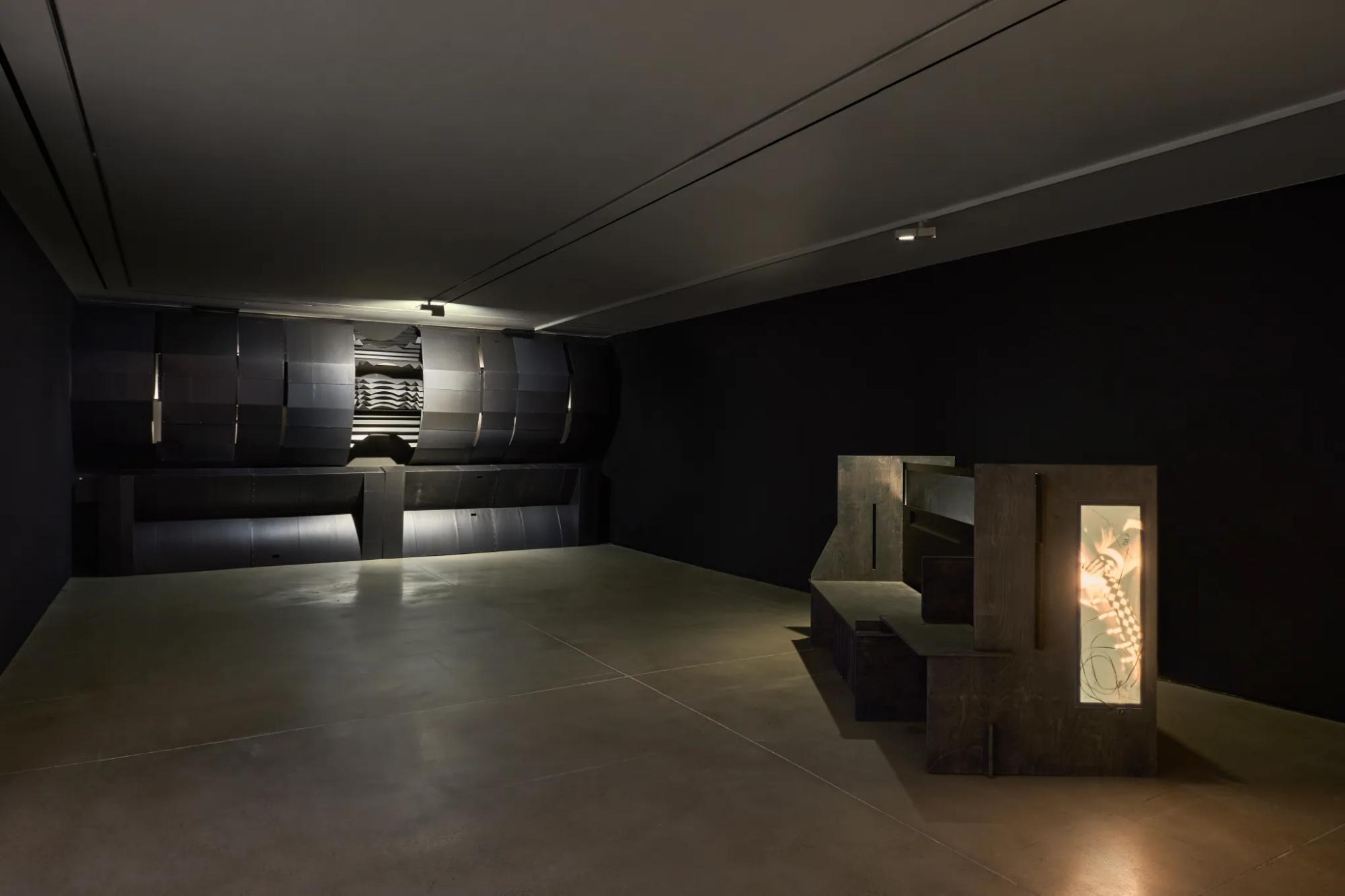
Stool, Sofa, Chest of Drawers, Bed (2026) uses furniture that delineates and establishes shared or individually occupied areas within communal settings, such as lounges, as sculptural material. The artist explores the architectural idealism embodied in the Soviet communal apartment, or kommunalka, and in Dutch structuralist architect Herman Hertzberger’s Montessori school designs. The work experiments with how users might cause furniture such as stools, sofas, chests of drawers, and beds to depart from supposedly ideal systems and orders and assume different functions.
Doom · Anathema · Inui (2025) is a sound sculpture that began with the artist’s experiences of hearing loss, tinnitus, and dizziness. Having recognized the hearing loss and its warning signs only belatedly, Kim sought to understand sudden hearing loss as something from the past that abruptly manifests in the present. Using two-channel audio played through three speakers, the artist gives form to these auditory experiences within a sculpture reminiscent of a piano. The sounds from the three speakers evoke the body’s responses to hearing loss, tinnitus, and dizziness, creating a distorted sense of time and space through subtle differences in sound, timing, and volume between the two ears. Visitors can sit on the sculpture and listen, as the sounds played separately through each speaker mingle within its interior to form a single auditory experience. Listening combines with the visual experience of viewing the sculpture, allowing the work to intervene in perception at close bodily range. Through the viewer’s involvement, signs that have passed into the past reappear within present sensation.
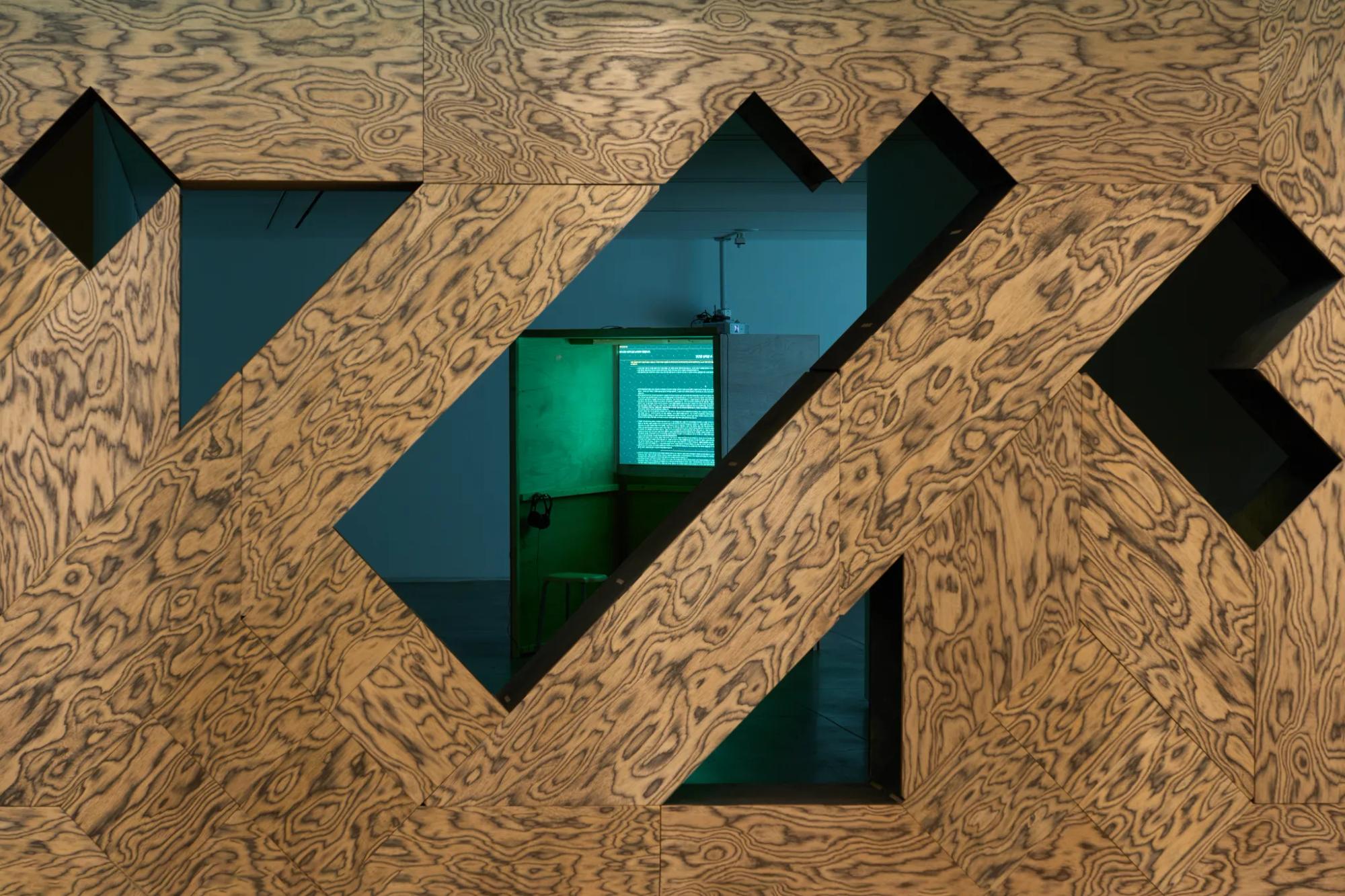
Seo and Geuk: 書 隙 (2026) uses corrugated plastic moving boxes to explore the physical and conceptual gaps between books, texts, and media. As the Chinese characters in the title indicate, seo (書) means “book” or “writing,” while geuk (隙) means “gap.” For the artist, seo is a metaphor for stories that live and breathe only within books. Kim imagines the boundary between black type and white space dissolving through changes in their density on the page. If the black letters expand to cover the page, only an unreadable black book remains. The artist suggests that life and ideals operate in a similar way: an ideal remains an ideal only while it is at a distance from reality. If it expands too far, it covers reality, making it impossible to distinguish what is real from what is desired. Kim imagines the book returning to a black mass when words no longer promise anything. Geuk refers to the “gap” frequently invoked in the language of art and curating. The artist understands it not as a line but as an area and a space—a piece of land in its own right. It also evokes hanjeon (閑田), land left uncultivated, and hyugyeong (休耕), a period of fallow that permits time without production. Yet the artist’s reality is that of a self living in a world with no idle land. In response, Kim has made a structure that occupies the wall without being assigned any useful purpose.
Seo Yeong (b. 2001)
Seo Yeong focuses on the gap between what we actually feel and remember and what is expressed when an object or event is represented in words or images. Attempts to describe or show something with greater precision can, paradoxically, produce an experience further removed from reality. Seo explores how these discrepancies shape images and memories of the body in particular.
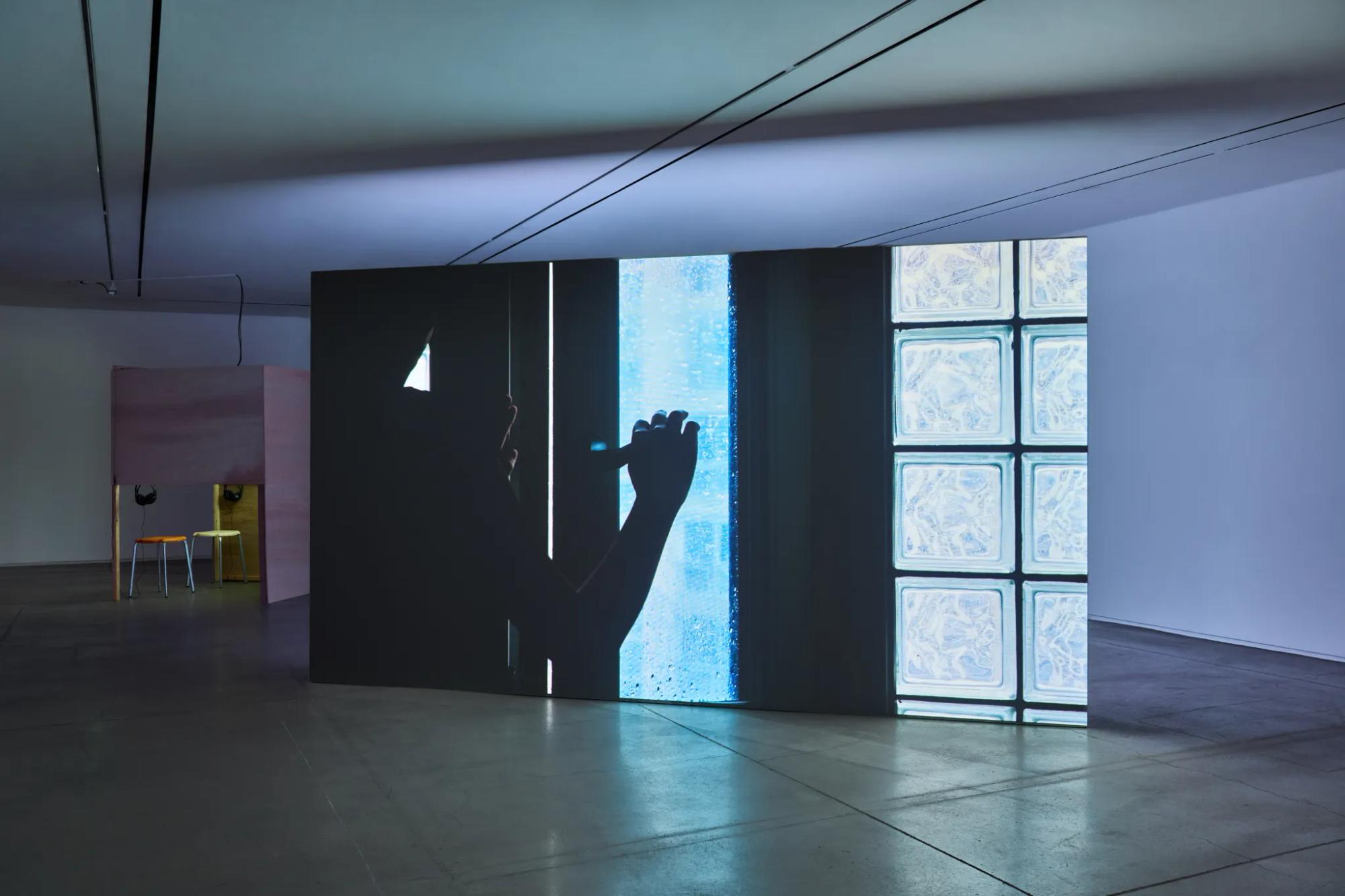
Little Red Riding Hood and Lucid Dreaming (2026) juxtaposes two bodies moving at different speeds. Its two screens contrast dream and waking reality. On one screen, arms with interlaced fingers move slowly, evoking bodily sensations within a dream. On the other, footage of city pavements and surrounding scenery, recorded by a walking body, appears alongside ambient sound. The interlaced hands and arms were filmed in high-speed mode. The increased frame rate produces a slow-motion image, and the hands’ movements, as though gently caressing the air, evoke a sense of touch. By contrast, the handheld footage of a walk indirectly conveys a body moving automatically, seemingly without a destination. Through this contrast in bodily sensation, the two screens emphasize the body’s sensory capacities and its role in connecting dreams, as virtual spaces, with reality.
An Unquotable Book (2025) grew out of Seo’s interest in how personal texts are read, particularly the language of self-narration. Language constructs narratives by conveying information and connecting events. Seo considers how, when a text involving self-description or firsthand experience is attributed to a particular individual, the reader ultimately reads toward that person. To bring the reading of the text closer to the reader’s own experience, the artist replaces proper nouns and personal pronouns in the video with ☐. Rather than assigning the narrative to a particular person, the work leaves it to the reader.
Time Spent Reading a Memoir and Pareidolia (2026) began with the memoirs of Céleste Mogador, the legendary figure who captivated nineteenth-century Paris as a courtesan, cancan dancer, equestrian, and writer. Having grown up in difficult circumstances before marrying into the nobility, Mogador wrote four volumes of memoirs to answer attacks against her and defend herself. Public criticism only intensified, however, leaving her torn between a desire to withdraw the publication and circumstances that compelled her to continue. Her writing would nevertheless become connected to the self-narratives of women in similar situations, occupying an important place in a literary lineage of women asserting their own voices and representing their lives. Drawing on the context of Mogador’s memoirs without directly quoting their contents, Seo foregrounds “time spent reading” as a way of engaging with the text. The music-box sound incorporated into the work translates the traces left after reading into an auditory form. To produce it, the artist printed the complete memoirs, available through an online archive, onto A4 sheets and used the page numbers aligned along one side of the paper to create a musical score.
Song Si-yeong (b. 1997)
Song Si-yeong is interested in how personal memories are reconstructed through machines and apparatuses, and how the body remains as an image in that process. Working across video, installation, and performance, Song closely observes the ways and conditions through which the work reaches others. Recent video works, also presented at film festivals, trace how society, politics, and science and technology have idealized, controlled, or erased the human body through images across history.
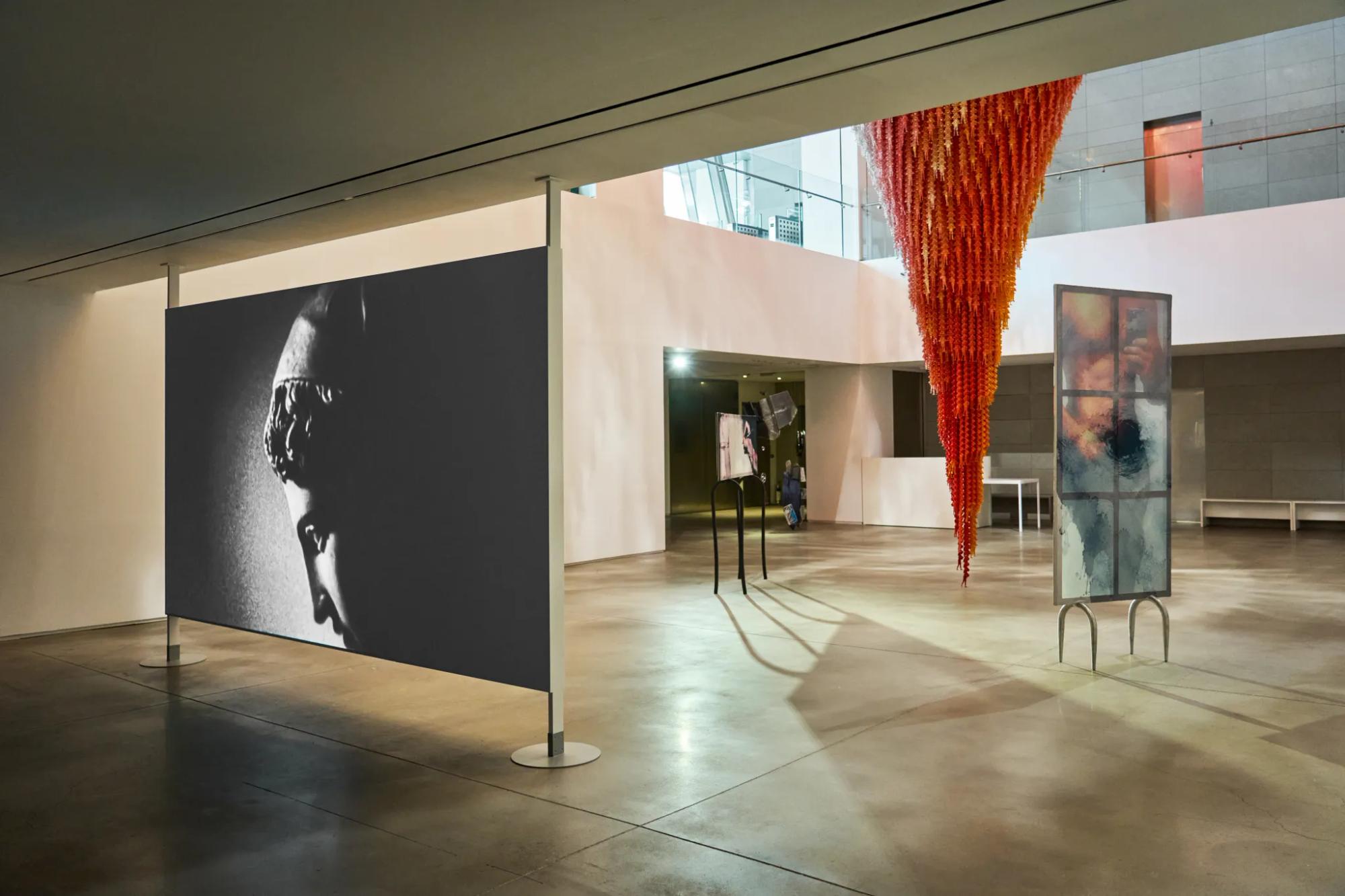
All the Ways We Disappeared (2025/2026) follows the history of how media have organized or effaced our bodies through moving images, addressing the bodily remainder that cannot be fully translated into the frame. Regularly broadcast time signals are interwoven with images of bodies controlled through a totalitarian perspective. Riefenstahl’s Olympic documentary, which appears in the video, depicts athletes as heroic figures or flawless bodies resembling Greek statues. In doing so, it served fascist propaganda’s pursuit of a purified world through exclusion and distortion. Mass gymnastics likewise exhibits totalitarian traits, emphasizing geometric order and mechanical control of the body to erase the individual and magnify the collective.
Kinetic Oracle (2025/2026) traces historical and technological lineages of attempts to overcome the limitations of the human body, extend sensation and control through technology, and ultimately transcend the body itself. While diving training in the 1950s sought to overcome the limits of physical flesh, humans have increasingly become connected to machines through technologies such as autonomous driving. After encountering intelligences that surpass their own, such as AlphaGo, they have finally begun to create transcendent bodies capable of existing and acting without flesh in virtual worlds.
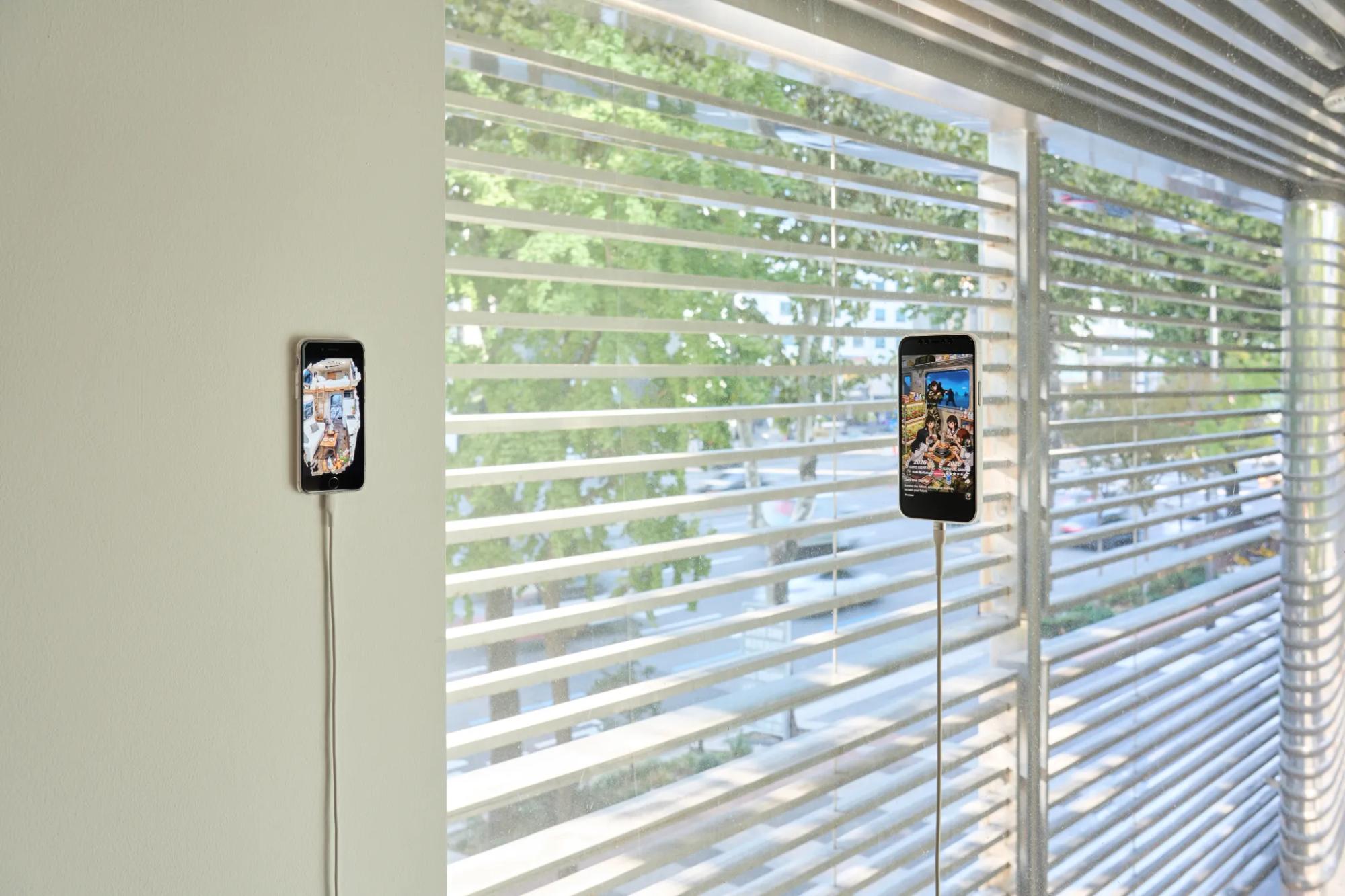
Landscape with Zombies (2026) directly engages with the advertising conventions of Dark War: Survival, a game known for advertisements that borrow from the zombie-apocalypse genre regardless of the actual gameplay. The shelter in these advertisements marks a boundary. At this threshold, the fear of being devoured by zombies gives way to the relief of survival, followed by the responsibilities of managing and caring for survivors. In the genealogy of zombie fiction, the zombie has evolved from a slave controlled by a sorcerer into a being that consumes without purpose—a symbol of indiscriminate ingestion and consumption, fear, and violence. By contrast, the Ghibli-style shelter represents a warm interior where people gather to share a meal. Ultimately, by contrasting deprivation outside with comfort within, the advertising strategy stimulates hunger and draws viewers into an endless impulse to consume.
Lim Da-ul (b. 1992)
Lim Da-ul explores the uncertainty of perception by revealing discrepancies between what is seen and what exists, with a particular interest in illusion. Art history has already taught us that there is no innocent eye when looking at an object or a work of art: conventions and the psychology of perception are projected onto it, allowing illusion to operate. Lim takes this a step further, regarding illusion as part of reality itself.
Choi Jae-yeon (2023–2026) consists of fabric printed with digital images and fitted over metal supports. Although the artist presents the work as painting, it moves between painting and sculpture depending on the viewer’s perspective. Its painted surfaces evoke the various liquid-crystal screens on which image and matter, illusion and reality, coexist. The translucent silk reveals or conceals the metal framework within, while images on the front and back intermingle, leaving afterimages and fragments of illusion rather than a clear impression.
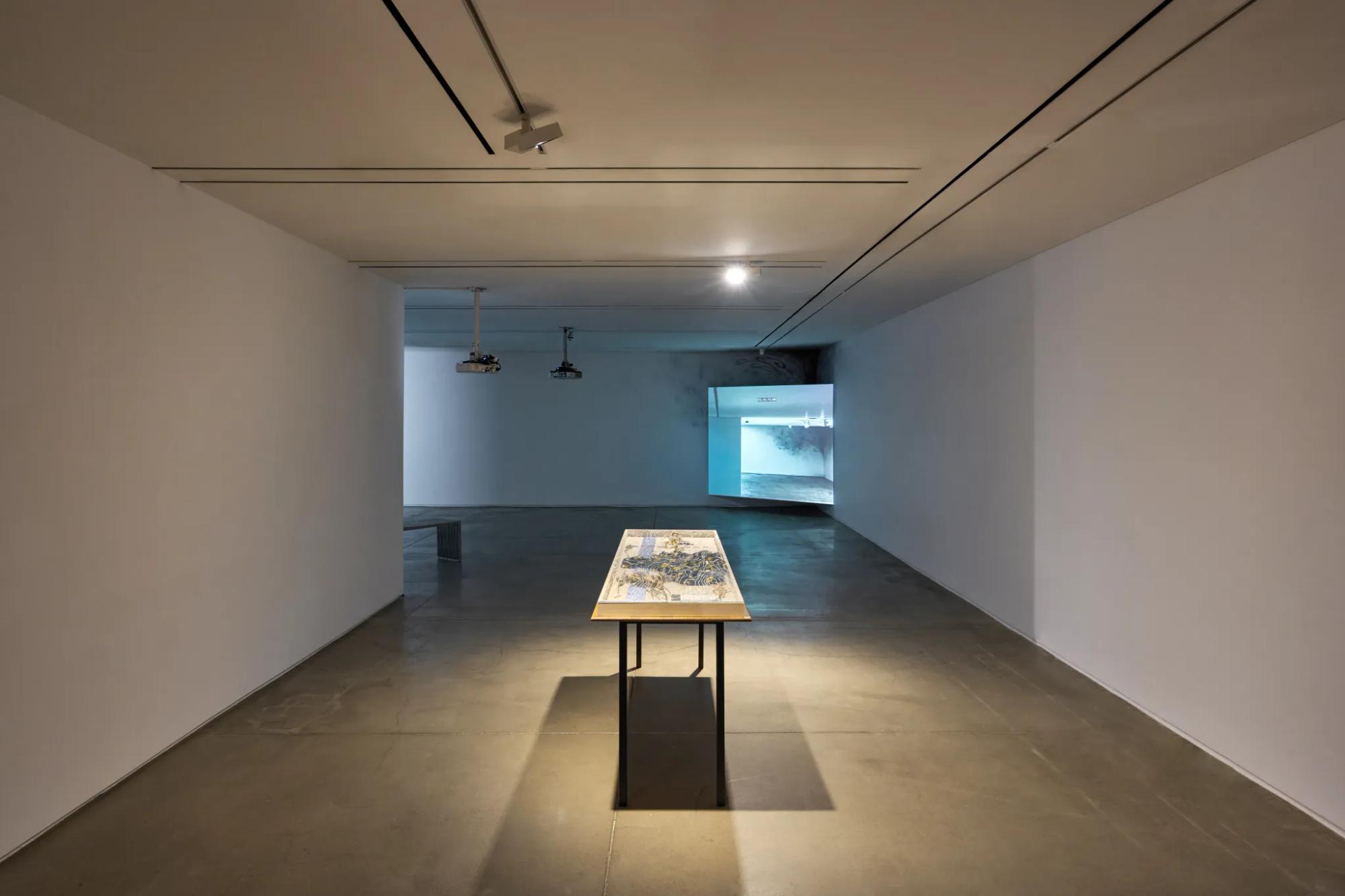
Comédie (2026) brings images and assorted objects together as a single scene, drawing on theatricality as a quality shared by painting and sculpture. Images and objects arranged close to the floor beneath glass take the form of a coffin, originating in the artist’s personal experiences of death and memory. Like its ambivalent title, which encompasses both comedy and tragedy, the work seeks to reveal the gaps where painting and sculpture, reality and illusion, and life and death meet.
Parcel (2026) is a performance involving the changing of the paintings in Choi Jae-yeon as though they were clothes, or the use of objects from Comédie. The first performance was left undocumented to protect the participants’ privacy. In the absence of an objective record, individual memories diverged. The artist therefore plans to stage a further performance incorporating these differences in the original participants’ recollections.
Jupiter Phobia (2026) places a CCTV screen showing the space before the exhibition in one corner of the gallery. The work invites viewers to see the space from a distant surveillance perspective, filmed from an angle unavailable to their own eyes. Unidentified Chinese characters and drawings appear on the rear wall in the footage, but the screen installed in the gallery obscures them, preventing viewers from seeing the wall images directly. “Jupiter phobia” is not a recognized medical diagnosis, but an imagined phobia circulated through online communities: the anxiety that Jupiter’s Great Red Spot is watching one incessantly, like a human eye. The artist sees this as a contemporary neurotic symptom arising from advances in digital technology that enable ultra-high-resolution images. Adopting CCTV’s omniscient viewpoint, Lim restricts the viewer’s visual access in specific ways. The work reveals how technologies that allow us to see more can paradoxically constrain our gaze and intensify the feeling of being watched.
Janja (b. 1999)
Janja develops work by collecting references connected to personal experience, revealing the complex ways individuals are entangled with their surroundings and society. Working across sculpture, sound, performance, and research, Janja reflects on the hidden structures underlying AI and digital image-production technologies that dominate the contemporary visual environment. In particular, the artist brings back into view realities that are concealed, marginalized, or erased as they fail to keep pace with accelerating science and technology, reconfiguring them through art.
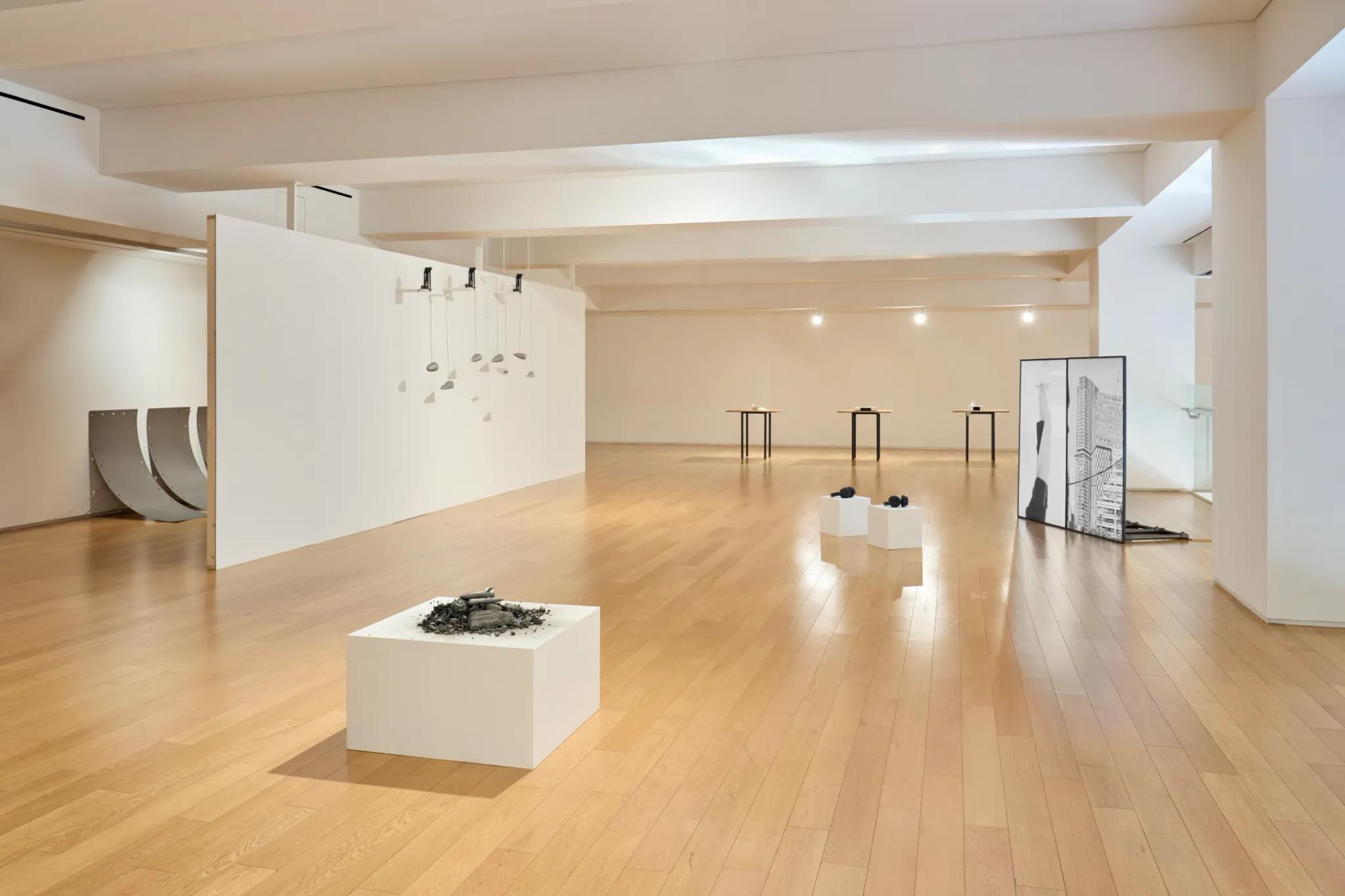
Untitled by the Roadside (2026) is a kind of musical instrument made from car parts, metal fragments, and steel plates collected along the streets of Chicago’s Pilsen neighborhood. Though sharp and industrial, these materials produce clear tones when they strike one another, like wind bells hanging from the eaves. For the artist, Chicago is a city where individualism and fragmentation have reached an extreme. Through gentrification, community and solidarity have been dismantled, while alienation and separation have become everyday conditions. The transformation of scattered roadside fragments into an instrument reveals the city’s paradoxes.
Directional (2026) materializes the sense of aerodynamic speed in an attempt to run missile technology—a pinnacle of the advanced defense industry—and its acceleration in reverse. Cast nose cones based on the fronts of high-speed trains, aircraft, and other flying vehicles either swing like pendulums or remain still. They ask where we are heading, already situated within a world shaped by technological acceleration.
Orbits and Phenomena (2026) is a sound installation in which exciter speakers attached to the backs of industrial steel plates turn the plates themselves into vibrating sound sources. The curved sheets evoke the sleek outer shells of rockets or missiles. Imagining the interior of these shells, the artist layers slowed, reversed recordings of missile launches with sounds produced by the resonating steel. The work makes physically and spatially perceptible the ironies of an accelerating society that glorifies speed and technology, and of a defense industry that packages destruction in sleek forms.
Autonomy ⇄ Automation (2026) begins with the story of the Reynolds Rocket, the first commercially successful ballpoint pen in the United States. Released shortly after the end of World War II, the pen was designed in the form of a rocket, then a symbol of cutting-edge technology. Promoted through the exaggerated claim that it could “write underwater,” it pursued a strategy of selling an image rather than quality. Having evolved in the image of speed, the pen is the rocket’s smallest and most familiar form. Yet as machines gain autonomy, human decisions become automated, and we are reducing the world to ashes with pens and rockets.
Assembled Glitch (2026) draws on Janja’s experiences working as a UGC creator and as a part-time interpreter at a defense-industry exhibition. UGC creators make advertisements appear to be ordinary users’ candid reviews, while interpreters efface their own voices to convey the words of others seamlessly. Both roles make their subjects appear familiar and trustworthy through the erasure or abstraction of the self, sharing a structure through which people’s perceptions can be manipulated. The artist produced a short-form defense-industry advertisement and fractured its image with mosaic film. The video turns its gaze toward the pen and the rocket amid the ashes.